

YFN Stories: Felix Farrow
Accessible Glamour at the London Film Festival
by Felix Farrow
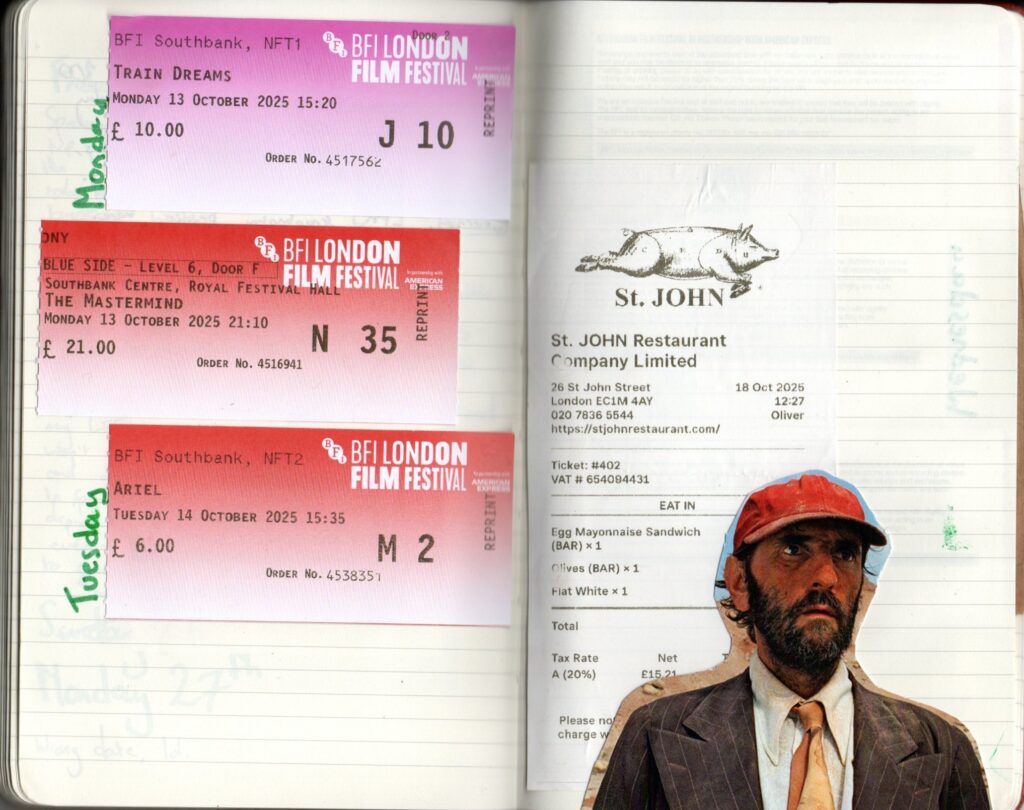
The BFI London Film Festival journey begins some four weeks before the start of the festival proper, not at BFI Southbank or Royal Festival Hall but at whatson.bfi.org.uk. “Everyone is invited!” proclaim banners across the homepage, which might explain why seemingly half of London had joined the queue for general sale for tickets on the morning of Tuesday 16th September to deny me anything less than a two hour wait.
I was lucky enough to invest a full week in LFF this year, something only possible thanks to the incredibly generous support of Young Film Network South East. Helpfully, the BFI offers a uniquely generous ticket resale policy; more tickets release each week and even a brief trawl through Reddit and Bluesky (r/LondonFilmFestival, @LFFStubs – buyer beware) can return resales for most showings. Of course, failing that, each venue’s on-the-day standby queue offers the chance of snagging a last-minute ticket.
A month later, having eventually secured a handsome supply of tickets for around seven or eight screenings with hopes of netting more later, I made my way into London for the first day of the festivities. A handful of high-profile galas numbered amongst them (Mark Jenkin’s Rose of Nevada, the Springsteen biopic), where ticket holders are given the opportunity to “walk the red carpet” (admittedly, more of a large rug round the back of Royal Festival Hall) before screenings, beginning with Kelly Reichardt’s The Mastermind. Feeling woefully underequipped for not bringing Challengers merch for Josh O’Connor to sign, my friend Julie and I dutifully took our places at the barrier hoping to share a scant word with Reichardt, whose deeply beautiful microbudget gem Old Joy we had screened earlier this year. Or to at least ask Josh O’Connor about his hair routine – a subject of great academic interest to me.
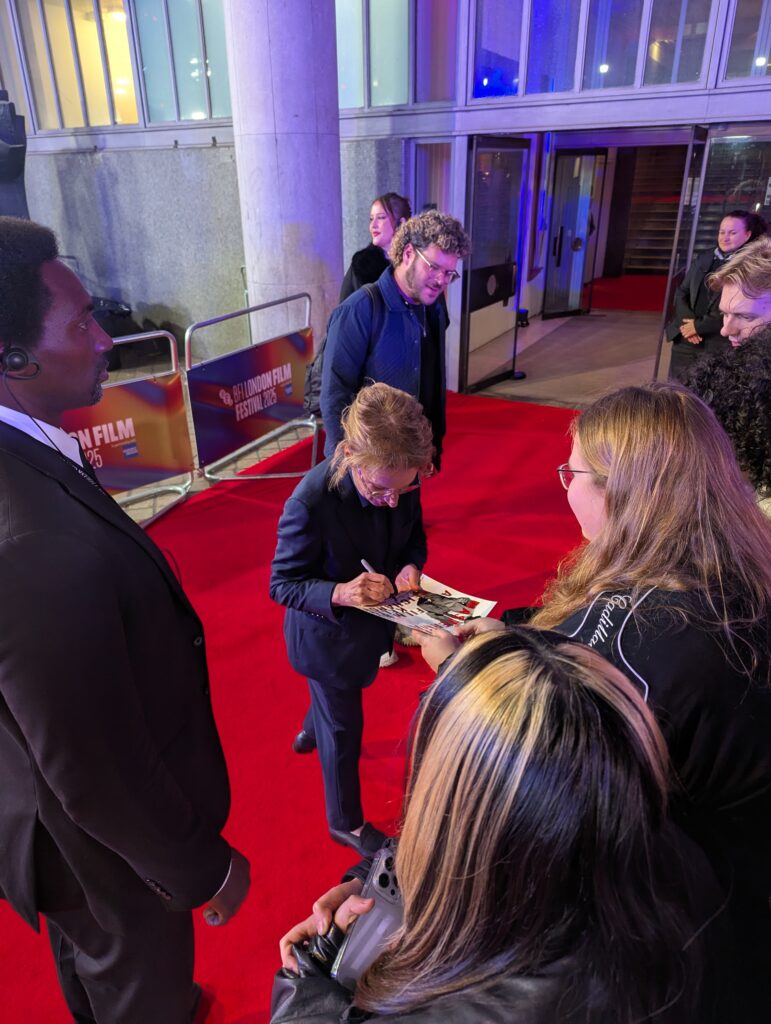
Glamour made accessible is the ostensible function of London Film Festival. LFF does not always succeed in its commitment to true inclusivity and other writers have rightfully questioned its attempts to attract lower-income attendees. But for those that can battle through its arcane ticketing system and occasionally eye-watering prices, the festival promises momentary escapism from student film sets and high street Odeons, towards something grander and more ostentatious. For young would-be directors and programmers, it’s a reminder of why we’ve all made the incredibly financially irresponsible attempt to build our careers in this industry – why we’re all here.
With larger multi-venue festivals, there can be a risk you’ll feel lost in that noise – their scale too drawn out, too diffuse to ever feel intimate or friendly. Thankfully, BFI Southbank is uniquely blessed with an unusually permissive policy on lingering, making it one of the few places in central London to simply sit, hang out, charge your phone or consume an unsanctioned Tesco meal deal without being harried on. What results is some sort of mad filmic melting pot, where students hastily tap away at half-finished screenplays between screenings and all manner of ADs, PAs, ALMs and other film set types discuss upcoming projects (them: countless short films, plaudits, job opportunities – me: unemployment, this blog piece). Before Saturday night’s gala screening of Pillion, a queer biker drama from writer-director Harry Lighton, scores of leather daddies queued for £7.50 IPAs. In previous years, friends have spotted Edgar Wright, Armando Iannucci and Mark Kermode sharing a ramekin of olives like the heads of some fearsome Guardian-reading Cerberus.
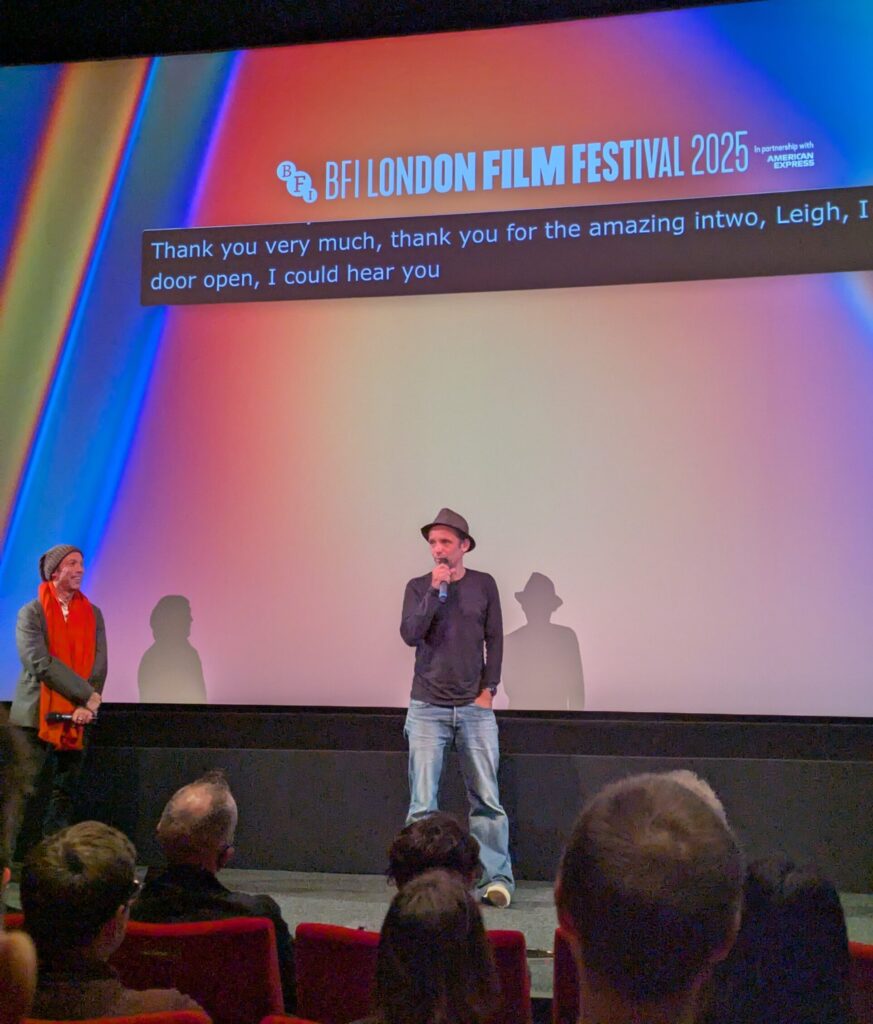
Namedropping aside, Julie and I were in search of shorts and features that we could use to develop the programme of ‘folks!’, the Brighton-based screening group we co-curate. Ariel, a Spanish-Portuguese co-production from director Lois Patiño, offers an utterly sublime magical-realist reimagining of Shakespeare’s The Tempest, while Basma Alsharif’s Morgenkreis (Morning Circle) was one particular standout from the ‘experimenta’ programme, depicting a Palestinian woman’s battles with the bureaucratic German immigration system. More Life (whose premiere at the PCC we almost missed after inhaling some crispy pork belly noodles at Wong Kei just five minutes earlier) makes claim to being the first feature shot within the 19.5:9 aspect ratio of an Instagram livestream. Director Bradley Banton stewarded what he called “the shortest standing in LFF history”, having the audience stand to rapturously applaud before sitting down in silence three seconds later.
The Mastermind, La Grazia and Train Dreams did not disappoint, and I am grateful that I can now make claim to having seen Bruce Springsteen live (on the stage of Royal Festival Hall, 500 ft away, saying all of ten words). But as with any good festival, LFF rewards an open mind, and it was these smaller more obscure picks – usually booked after everything else had sold out – that so often justified the trip. Anyway, Josh O’Connor’s hair routine can wait till next year.
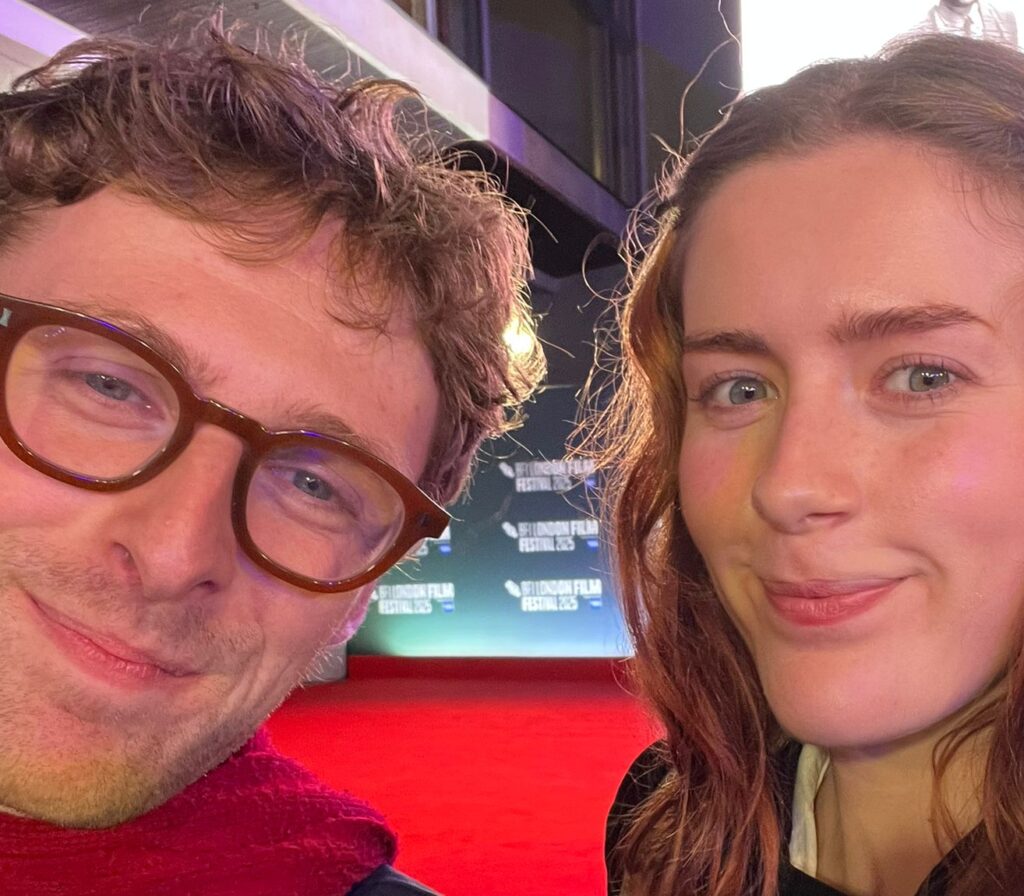
Felix Farrow is a film programmer and writer based between Brighton and the West Midlands. He served on BFI Film Academy’s 2024-25 Young Programmers cohort and later co-founded folks!, a Brighton-based film group, with filmmaker Julie Marcekova earlier this year. Together, they screen shorts, docs, and features in pubs with uncomfortable wooden seating.